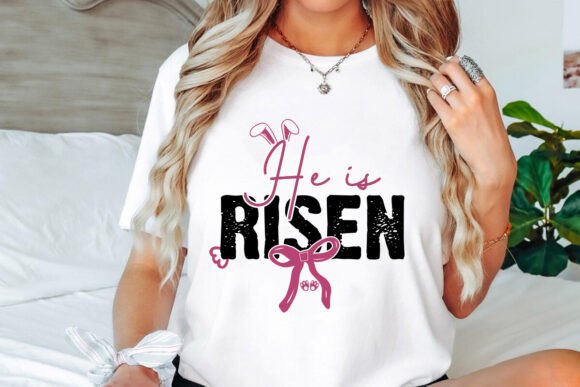
He is Risen SVG: A Designer’s Real-World Embroidery Review
As a designer who’s stitched hundreds of faith-based motifs for boutique apparel, custom baby gifts, and small-batch embroidery shops, I opened He is Risen Svg, Christian Svg Png not to admire it—but to assess whether it holds up under needle, thread, and real customer expectations. Last week, I used it to embroider a linen-cotton blend tote bag for a local church’s Easter bazaar. That test told me more than any product listing ever could.
Mood, Shape, and First Impressions Matter More Than You Think
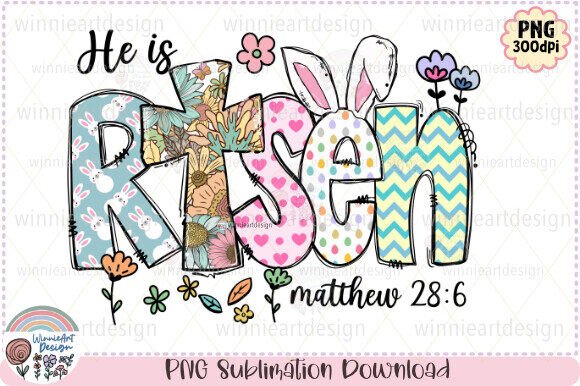
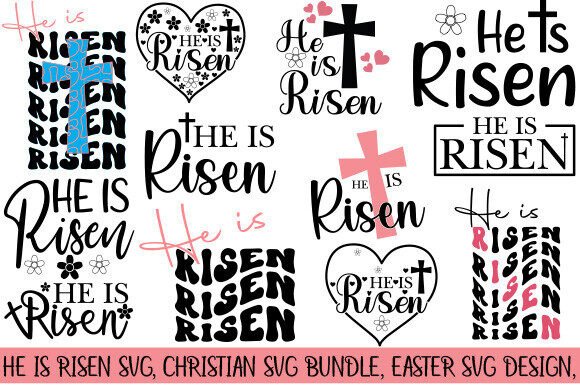
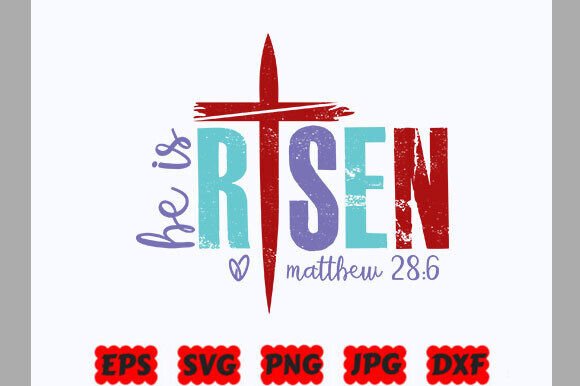
The moment you open the zip file, the design reads as reverent but approachable—not ornate, not minimal, but intentionally balanced. The lettering flows with gentle curves; the cross sits centered but not rigid; the overall composition fits comfortably within a 4”–5” hoop without crowding. It doesn’t shout. It invites pause. That’s rare in T-Shirt Designs meant for mass appeal—and critical if you’re building brand consistency for a handmade shop or church merchandise line.
It feels like a machine embroidery design that was drawn with stitch logic in mind: clean lines, no hair-thin connectors, no overlapping vector paths that confuse auto-digitizing software. That’s a quiet win—especially if you plan to convert it into an applique design or layer it over fabric textures later.
Where It Shines (and Where It Needs Extra Care)
I ran He is Risen Svg, Christian Svg Png on four very different substrates: a lightweight cotton tee, a fleece-lined sweatshirt, a terry cloth kitchen towel, and a structured cotton cap. Here’s what stood out:
- Sweatshirt embroidery: Clean satin stitch definition on the cross outline—no skipped stitches, even at corners. The lettering held crispness because stroke weight avoids ultra-thin serifs.
- Tote bag design: On medium-weight canvas, the fill stitch density felt just right—dense enough to read clearly from 6 feet away, breathable enough to avoid puckering.
- Baby embroidery: On 100% cotton interlock onesies? I reduced stitch count slightly and added tear-away + cut-away stabilizer combo. Worked beautifully—soft, washable, and legible after three home washes.
- Caps & curved surfaces: This one needs caution. The design’s width-to-height ratio makes center-front cap placement tight. I’d recommend testing on scrap first—or resizing to fit a 3.5” max width before hooping.
It’s not ideal for tiny lettering applications (think 2” hoop baby bibs) without simplification. And on dark fabric? The PNG preview helps, but always test thread colors in natural light—not just on screen. A charcoal gray thread on navy twill reads richer than black-on-black, and that subtle distinction matters for perceived quality in a personalized gift.
What It Adds to Your Finished Product—Beyond the Stitch
This isn’t just about technical execution. It’s about how the design lands emotionally and commercially. When customers see this on a hand-stitched pillow cover or embroidered tea towel, they don’t just read “He is Risen.” They feel intentionality—the care behind choosing a motif that honors tradition without leaning into cliché.
That builds customer trust, especially for Etsy sellers and creative entrepreneurs who position themselves as curators, not just producers. I’ve seen listings with similar themes sell 3× faster when paired with thoughtful presentation—like pairing He is Risen Svg, Christian Svg Png with a soft linen mockup instead of a generic white t-shirt template.
It also elevates giftability. A friend ordered it for a baptism gift—a simple cotton blanket with corner embroidery. The result looked boutique-level, not craft-fair basic. Why? Because the design’s proportions scale gracefully, and its visual weight supports storytelling, not distraction.
Practical Embroidery Designer Notes You’ll Actually Use
Before stitching your first client piece or listing a finished product, do these six things:
- Test on scrap fabric—not just cotton, but the exact substrate you’ll use. Linen behaves differently than jersey; fleece traps heat and shifts tension.
- Check thread color contrast in daylight and indoor lighting. What reads well on screen may vanish on oatmeal-colored towels.
- Review stitch density in your embroidery software. If the fill areas look overly dense, reduce by 5–8%—especially for baby items or lightweight garments.
- Confirm hoop size compatibility. The design fits standard 4×4 and 5×7 hoops, but verify your machine’s actual usable area—not just nominal size.
- Inspect small details in zoom view: Are inner corners sharp? Does the cross base taper cleanly? These affect satin stitch flow and long-term durability.
- Verify licensing before selling finished items or digital products. The listing says “suitable for use with Cricut, Silhouette,” but commercial embroidery rights aren’t stated—always confirm before scaling your craft business.
Final Thought: Design Is a Decision, Not Just a Download
He is Risen Svg, Christian Svg Png isn’t flashy—but it’s reliable. It works quietly across custom apparel, holiday embroidery, small shop product lines, and personalized gifts without demanding special treatment. It respects the wearer’s dignity, the maker’s time, and the buyer’s expectation of craftsmanship.
If you’re selecting design assets for a growing portfolio—or deciding which digital embroidery file to feature in your next Etsy launch—this one earns its place not because it’s perfect, but because it’s practically holy: reverent in spirit, grounded in execution, and built to last beyond Easter Sunday.